☰
This page is for informational purposes only and is not legal advice. Final compliance should always be confirmed with the applicable state agency, Public Utility Commission, Public Service Commission, city, county, water utility, or other local regulator before implementing billing, fee structures, retrofit requirements, or resident lease language.
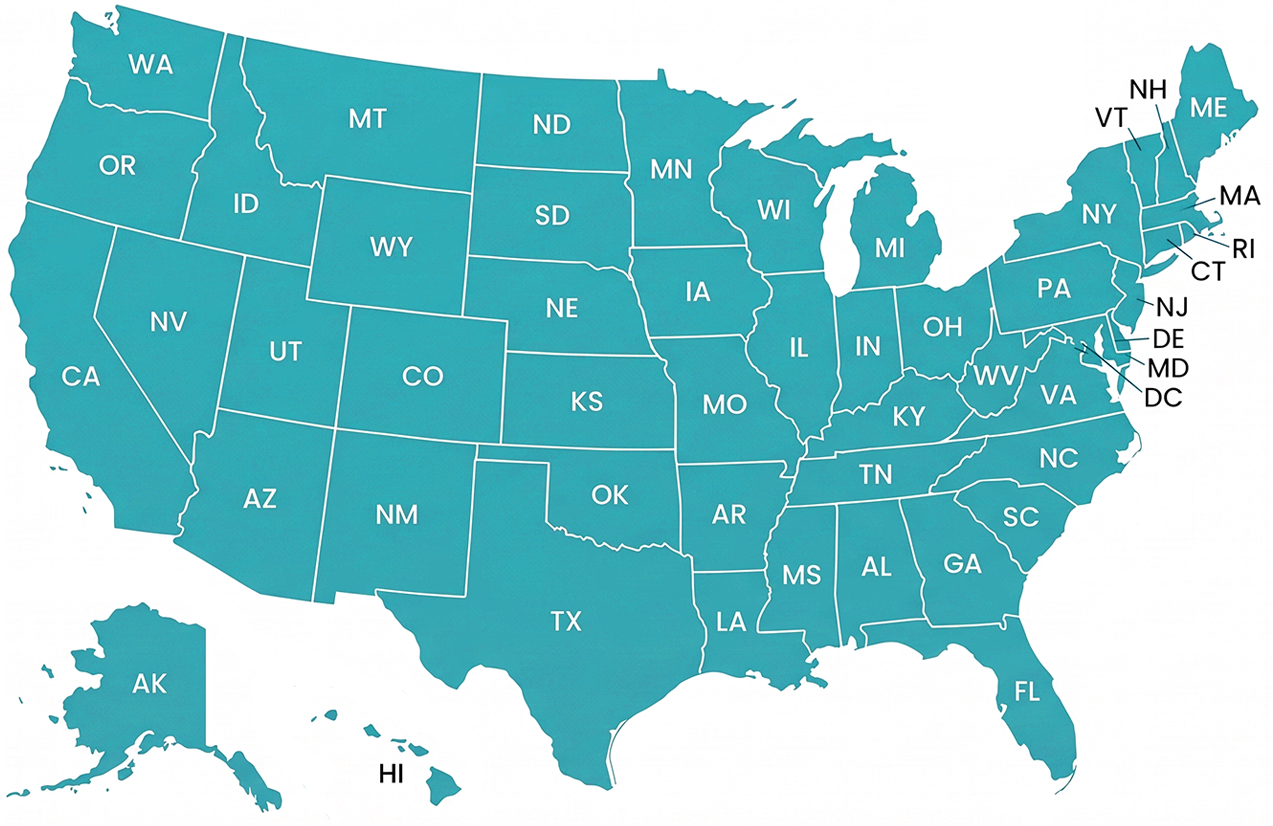
The summaries below are intentionally limited to states and local jurisdictions clearly mentioned in the supplied materials. Exact legal identifiers, place names, and titles are preserved where they were specifically referenced in the source material, while the explanatory language has been rewritten for clarity and web use.
California is presented in the supplied material as one of the strongest water submetering states, especially for new construction. The materials specifically reference SB 7 and state that new multifamily buildings are subject to submetering requirements beginning Jan 1, 2018, while local examples may create additional obligations or billing standards.The supplied material also specifically references San Diego, CA and describes a 2010 local ordinance requiring sub-meters in certain new multi-unit buildings and in some existing multi-unit buildings when the entire potable water supply piping is replaced. That same source set also notes local billing parameters in San Diego, including equal allocation of fixed charges, variable charges at the same rate as the utility bill, an administrative fee up to $4 per month, a late fee up to $10 per billing cycle, and bill content and notification requirements.
Georgia is described in the supplied materials as a state with mandatory submetering requirements tied to newer development. The sources specifically reference the Water Stewardship Act and state that new multi-unit, retail, and industrial construction is subject to submetering requirements beginning July 1, 2012.
The materials also note that Georgia does not appear in this source set as having a blanket statewide retrofit mandate for all existing buildings. However, local ordinances are referenced as potential additional compliance layers, including DeKalb County in certain multi-unit renovation contexts.
North Carolina is presented in the supplied materials as a state where, once submeters are installed, billing must reflect actual usage rather than estimated or blended allocation. The slide materials specifically characterize North Carolina as requiring actual usage billing once meters are in place, making billing structure and meter accuracy central to compliance.
For owners and managers, the practical implication is that installation alone is not the only issue; the downstream billing method matters as well. Lease language, calculation methodology, and resident-facing billing transparency should therefore be reviewed carefully before launch.
Washington is referenced in the supplied materials as a state with stronger mandatory adoption, particularly through building-specific or city-specific requirements. The sources also specifically mention Seattle, Washington and the Seattle Energy Code, describing sub meter requirements for new buildings over 20,000 sq. ft. and tenant spaces over 2,500 sq. ft., with partial retrofit requirements in some cases. The same source set also references hot-water submetering in multifamily buildings in Washington. Because the supplied material points to city and building-code context rather than a simple universal statewide rule summary, project teams should verify whether the applicable requirement comes from state code, local code, or a utility/building enforcement authority.
New York is described in the supplied materials as a higher-complexity market, especially in New York City. The materials specifically reference New York City, NY, Local Law 88, and note that the cited retrofit framework is not a blanket statewide water retrofit law for all situations. The same materials state that water submeter retrofit in New York City may be encouraged for conservation and may become relevant in certain conversions or major upgrades, while also noting that the NYC Department of Environmental Protection (DEP) treats water meters as city property even when installation and maintenance responsibilities fall on the owner. The deck further warns that DEP filing and installation requirements are highly specific and can cause delays if handled incorrectly.
States encouraging or permitting submetering.
Texas appears in the supplied materials both as a state associated with newer-build submetering requirements and as a large opportunity market where local rules matter. One table in the deck states that submetering applies to 5-unit buildings since Jan 1 2003, while other supplied material says Texas does not have a blanket statewide mandatory retrofit regime and that local ordinances often control how submetering is implemented.The materials also reference the Public Utility Commission of Texas as an oversight body for landlord submetering practices, especially around billing accuracy and transparency. For practical compliance, Texas projects should be evaluated at the property type, city, and utility-service level rather than treated as a single-rule state.
Arizona is described in the supplied material as a state that encourages submetering, particularly in new multifamily development, rather than one with a blanket statewide water submetering mandate. The supplied text specifically references the Arizona Revised Statutes and emphasizes consumer protection, fair billing, and transparency when landlords choose to install submeters.Arizona is also repeatedly framed in the materials as a conservation-driven market because of water scarcity. That makes it commercially attractive, but the compliance posture described here is still “encouraged and regulated” rather than clearly “mandated statewide” based on the provided sources.
Florida is described in the source set as a state that promotes submetering for water conservation and accurate billing, but not as one with a blanket statewide mandate across all existing buildings. The materials specifically reference the Florida Public Service Commission and present the state as supportive of submetering practices.
The supplied materials also provide a more specific local example in Miami-Dade County, FL, referencing a proposed ordinance and Local Technical Amendment to the Florida Building Code 7th Edition (2020) processed pursuant to section 553.73(4)(b), Florida Statutes, with language aimed at requiring installation of water submeters in certain new multi-unit properties served by a single master meter. This means Florida should be understood through both statewide policy guidance and local code amendments.
Nevada is presented in the supplied materials as a state that views submetering favorably, especially in water-scarce regions, but without a specific blanket statewide mandate identified in the source set. The materials consistently describe Nevada as encouraging the use of submetering for conservation and accurate utility billing.
From a website and sales standpoint, Nevada fits best in an “encouraged or conservation-driven” category rather than a “mandatory statewide” category based on the supplied references alone. That distinction is important when positioning retrofit opportunity versus hard compliance obligation.
Colorado is mentioned in the supplied material as a state moving policy away from RUBS in some contexts. The most specific identifier in the source set is house bill 25-1090, with a stated effective date of January 1st, 2026, and a summary that landlords are being pushed toward actual consumption-based charging using a smart meter or toward embedding water in rent.
Because that description comes from the supplied summary material rather than the full statutory text, the safest public-facing framing is that Colorado is an important watchlist state for actual-usage billing requirements and RUBS limitations. Any Colorado implementation should be checked directly against the enacted bill text and the relevant regulator or housing authority before rollout.
Tennessee is described in the supplied material as not having mandatory submetering regulations statewide. The same material says submetering is still recommended as a best practice for new developments and for fair utility billing and conservation.
This places Tennessee in a voluntary or encouraged category based on the supplied references. In practice, that means contract structure, disclosures, and local utility or landlord-tenant rules may carry more weight than a single statewide water-submetering mandate.
Connecticut is described in the supplied materials as a state where submetering is allowed for residential and commercial use, but owners must apply for approval before retrofitting. The same source set states there is no comprehensive mandate for all existing buildings. That makes Connecticut a regulated approval state rather than a broad mandate state in this source-limited overview. Owners should confirm the approval pathway and the relevant reviewing authority before installation or billing begins.
Maryland appears in the supplied materials primarily in the broader submetering context, with repeated emphasis on regulation and approval rather than a simple statewide water mandate. The deck specifically references the Maryland Public Service Commission (PSC), ANSI accuracy standards, and PSC certification requirements, while also noting that some Maryland rules in the source set focus more heavily on gas and electricity than water.Because the supplied material itself says water submetering is less clearly regulated than electric or gas in Maryland, the safest website treatment is to classify Maryland as mixed and approval-sensitive rather than to overstate a statewide water-specific mandate.
Indiana is included in the supplied materials, but the supporting language in those materials is focused primarily on electric submetering concepts and Indiana Utility Regulatory Commission (IURC) guidance. The same source set says owners must avoid excessive administrative fees and ensure bills accurately reflect metered usage.
Since your requested page is water-only, Indiana should either be omitted from the main water compliance narrative or included only with a note that the provided material is not water-specific enough to support a stronger water-submetering compliance summary. Based on your instruction to keep the page limited to clearly supported states, omission is the cleaner approach.
Louisiana is one of the clearest caution states in the supplied materials. The slide content says that billing residents for water and sewer through submetering is not allowed unless the provider is a municipality, and it attributes that prohibition to the Louisiana Public Service Commission in the source summary.
Because that is a strong limitation statement, Louisiana should be treated as a high-risk state for private owner water/sewer bill-back without municipality-based authority. Any Louisiana project should be reviewed directly with legal counsel and the applicable regulator before any resident billing model is deployed.
Maine is referenced in the supplied materials mainly in specialized applications rather than in general multifamily water submetering. The same source set says submetering is explicitly limited in the examples provided, which is why Maine does not read as a broad residential water-submetering state in the materials you supplied.For that reason, Maine should not be positioned on this page as a mainstream multifamily water compliance market based on the current source set. It is better treated as limited or outside the primary scope of this page.
San Diego, CA is one of the most concrete local examples in the supplied material, with a detailed ordinance summary covering installation triggers, billing methodology, administrative fee limits, late fee limits, and bill content requirements. For website purposes, San Diego is useful because it shows how local rules can become much more detailed than statewide summaries.
Miami-Dade County, FL is important because the supplied material points to a local code-amendment path rather than just general state encouragement. It is a strong example of why owners must check county-level and building-code amendments in addition to state-level summaries.
Seattle, Washington is highlighted in the supplied material as a city where code-based triggers can shape both new construction and some retrofit activity. It is a good reminder that city energy or building codes can drive submetering obligations even when the broader statewide narrative sounds less absolute.
New York City, NY is presented in the supplied materials as a uniquely technical and procedural environment, especially because of DEP control over water meters and filing requirements. That makes NYC less of a “simple state summary” issue and more of a specialist jurisdiction requiring careful coordination.
Across the provided sources, the most consistent compliance themes are straightforward: use state and local rules as the first filter, ensure billing tracks actual usage where required, keep any added fee within any allowed billing or administrative framework, and document the charge structure clearly in the lease or resident agreement. The UMCA material also stresses best practices around transparency, billing clarity, and accurate metering rather than aggressive markups or opaque fee structures.
A practical rule from the supplied Kaptech material is especially useful for owners: the usage rate should stay at or below the utility’s rate, and any separate charge should only be an allowed admin, reading, or billing fee clearly described in the lease and kept within any state cap. Where capital recovery or software recovery is desired, the deck suggests that recovering those economics through rent may be safer than marking up the water rate itself, subject to landlord-tenant and notice rules.
This page is intentionally limited to the states and jurisdictions clearly mentioned in the supplied material: California, Georgia, North Carolina, Washington, New York, Texas, Arizona, Florida, Nevada, Colorado, Tennessee, Connecticut, Maryland, Louisiana, and Maine, along with local references such as San Diego, Miami-Dade County, Seattle, and New York City. It excludes broader 50-state claims and does not present itself as a substitute for direct legal review of statutes, code sections, commission rules, or local ordinances.
Sources:
https://www.ncsl.org/energy/utility-submetering?utm_source=chatgpt.com
www.utilitymca.org/bestpractices.html
Let Kaptech Water Submetering show you and your team how water submetering can deliver increased tenant fairness, NOI and water conservation for your property. Shift the financial responsibility for water to your tenants!