☰

Flat-fee water billing may feel simple, but simplicity can come at a significant cost for multifamily owners. When every resident pays the same amount regardless of actual water use, the property often becomes the default insurer for high consumption, plumbing leaks, and avoidable waste. A flat fee can also create a disconnect between what residents use and what they pay. The result is often an operating expense that grows quietly while ownership has little unit-level information to explain why. In a building with one master meter, a rising utility bill might reflect normal occupancy changes, a leaking toilet, irrigation overuse, a broken appliance, or a single apartment with an ongoing issue. Without apartment water meters or another credible allocation method, those differences can be difficult to identify. The financial impact is not limited to the unrecovered portion of the water bill. It may include sewer charges, maintenance time, resident disputes, delayed leak repairs, budget variance, and lower net operating income. For owners trying to strengthen multifamily utility billing, the question is not whether a flat fee is easy to administer. The question is whether it accurately supports the property’s financial and operational goals. A water submetering system can replace uncertainty with data and give owners a clearer path to fairer resident billing. The first step is understanding exactly where the hidden drain occurs.

A flat fee assigns the same charge to every resident or every unit type without directly measuring individual consumption. It may be used when a property is master-metered, when management wants to avoid meter installation, or when legacy operations have made it the default. Yet water use is not uniform. Household size, fixtures, work-from-home patterns, laundry habits, appliance conditions, and undetected leaks all vary from unit to unit.
That means a flat-fee water charge may subsidize high users while providing no direct signal to identify avoidable consumption. Residents who use less may view the charge as unfair, while residents with unusual usage receive no reason to investigate it. Meanwhile, the owner still pays the master utility bill and often absorbs fluctuations that cannot be traced to a unit, system, or operational cause.
This is why water cost recovery should be evaluated as an operational strategy, not just a billing setting. The more visibility an owner has into consumption, the easier it becomes to distinguish normal use from abnormal use and recover costs in a more defensible manner where permitted.
To estimate the cost of flat-fee water billing, start with 12 months of water and sewer invoices. Separate the utility expense into water, sewer, base charges, taxes, and other applicable components. Then compare the total cost with the utility revenue actually collected from residents, including any flat fees, allocation charges, or other utility reimbursements. The difference is the first measure of unrecovered cost.
Next, identify costs that may not appear as a clean line item. These can include common-area consumption that is incorrectly blended into residential recovery, vacancy exposure, collection expense, manual billing work, maintenance callouts, unresolved resident complaints, and consumption from leaking fixtures. If the property cannot identify its largest water users or abnormal patterns, that lack of data is itself a risk.
A practical example: if a 100-unit property charges a $35 monthly flat fee, it collects $3,500 per month from residents. If the monthly water-and-sewer expense averages $5,400, the direct gap is $1,900 per month before accounting for administrative effort or leak-driven overages. The right solution depends on local rules and property infrastructure, but the example illustrates why flat billing should be reviewed with actual invoices rather than intuition.
Water submetering is often the clearest long-term alternative because it creates unit-level consumption data. In a submetered property, each apartment water meter measures a defined portion of water use, and a billing platform can calculate charges from documented reads and the property’s approved billing rules. This can improve transparency for residents and give management a way to investigate exceptions.
For properties where individual submeters are not immediately feasible, an owner may still improve performance through a more carefully designed allocation approach, better common-area tracking, leak monitoring, fixture upgrades, and clearer resident communications. However, any ratio utility billing or reimbursement method must be evaluated against the applicable state and local laws, lease disclosures, and fee limitations.
The key is to stop treating water as an uncontrollable line item. A property assessment can identify plumbing feasibility, revenue leakage, expected implementation requirements, and the best pathway—from phased metering to a complete smart water submetering and resident billing solution.
Want to quantify your property’s unrecovered water costs? Request a Kaptech Water Cost Recovery Assessment.
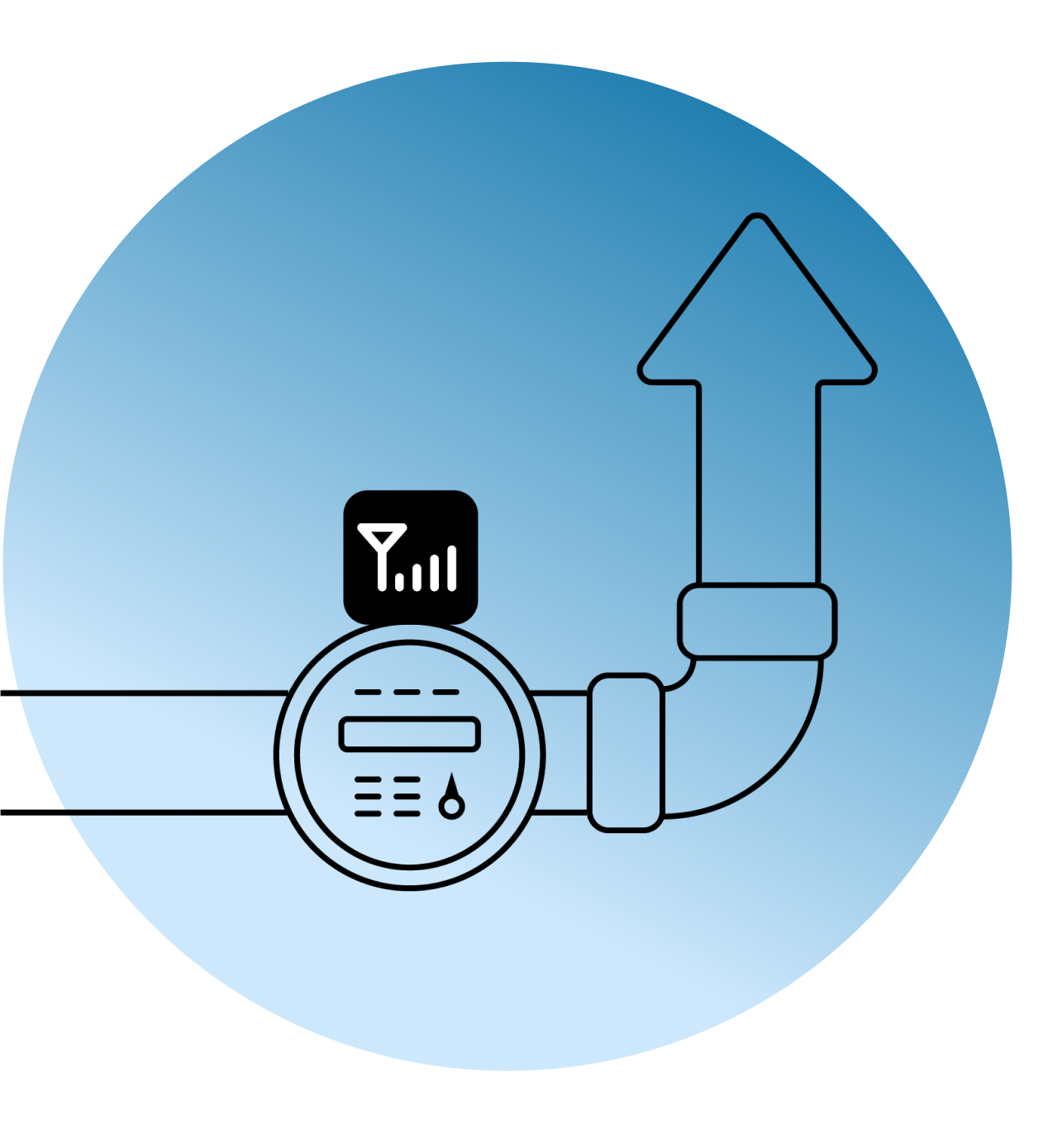
Let Kaptech Water Submetering show you and your team how water submetering can deliver increased tenant fairness, NOI and water conservation for your property. Shift the financial responsibility for water to your tenants!