☰
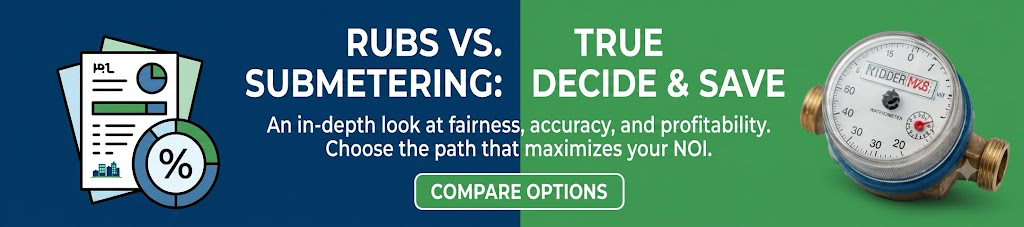
Multifamily owners frequently face the same question: should we allocate water costs through RUBS, or should we install water submeters and bill from actual meter reads? Both approaches are used to address master-metered utility expenses, but they are fundamentally different. A Ratio Utility Billing System, commonly called RUBS, divides a property’s water and sewer costs among residents using a formula that may consider square footage, occupancy, bedrooms, bathrooms, or other factors. Water submetering uses individual water meters to capture consumption for a defined unit or load. The difference matters because it affects resident perception, billing accuracy, compliance obligations, installation costs, operating complexity, and the owner’s ability to identify waste. RUBS may be easier to deploy where no unit-level meters exist, but it is still an allocation method rather than a direct measurement method. Submetering generally offers stronger consumption visibility, although it requires an infrastructure and implementation investment. Neither option should be treated as universally legal or universally appropriate. State laws, local rules, lease language, utility tariffs, fee limitations, meter standards, and property plumbing configurations can all affect the right answer. Owners should also consider the long-term strategy: are they trying to implement a temporary recovery mechanism, improve resident fairness, find leaks, reduce water use, or build a data-driven utility-management program? The best choice is the one that aligns the property’s infrastructure, compliance requirements, resident experience, and financial objectives. This guide compares RUBS vs. water submetering so owners can make that decision with clearer expectations.
RUBS is a formula-based methodology that allocates a property’s master-metered utility costs among residents. The National Apartment Association describes RUBS as a formula-based method for calculating resident water usage and assessing associated costs. Depending on the program, a resident’s share may be influenced by unit size, occupants, bedrooms, bathrooms, or another approved factor. Water submetering is different because each apartment water meter records consumption at the unit or assigned load point. This creates an individual record of water usage that can support billing, resident inquiry resolution, usage analysis, and leak detection. Common areas, irrigation, laundry rooms, and other non-residential uses can also be separately metered where that improves accuracy and visibility. The key distinction is not that one system is “simple” and the other is “complicated.” It is that RUBS estimates a resident’s responsibility through a formula, while submeters measure usage. The practical impact depends on how diverse consumption is within the property and how important direct visibility is to the owner’s objectives.
RUBS can be perceived as fairer than a flat fee because it uses a structured allocation instead of charging every resident the same amount. However, it may still produce a charge that does not track a resident’s actual water consumption. A resident who conserves water may pay more than expected if the allocation formula relies heavily on unit size or occupancy factors. Conversely, a high-use unit may not bear the full financial impact of its usage.
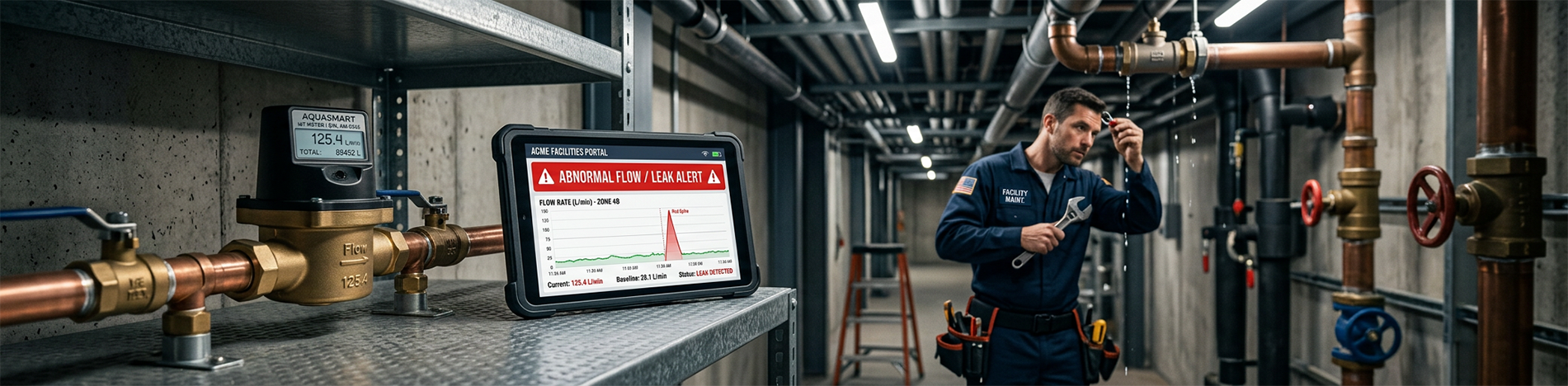
Submetering usually provides a more direct connection between use and charge. That can improve transparency, especially when invoices clearly show billing dates, meter reads, rates, sewer methodology, fixed charges, and a process for asking questions. It also gives management better evidence when a bill is unusually high, because a consumption pattern can be reviewed before assuming a billing error.
Neither model eliminates the need for good resident communication. Before launch, explain the method, what appears on the bill, how usage is measured or allocated, how common-area charges are handled, who to contact, and how to report a suspected leak. Clarity reduces disputes and gives the property a stronger resident-service experience.
See: https://www.latimes.com/california/story/2026-08-26/la-renters-are-billed-for-shared-utilities-some-wont-pay-until-they-can-see-math
From an NOI perspective, both RUBS and submetering can support utility cost recovery where permitted. The financial difference is that submetering can also create actionable consumption data, enabling leak response, conservation programs, and more precise operational management. RUBS can be a lower-barrier option for an existing property, while submetering may offer a more durable infrastructure investment—particularly where renovations, replumbing, or new construction create a practical installation window. Colorado is a useful example of why broad legal claims should be avoided. Current commentary indicates that existing Colorado multifamily properties may continue using RUBS if they meet conditions related to no overbilling, limited markups, exclusion of common-area costs from allocations, and clear lease disclosures. It also reports that new residential premises applying for permits on or after July 1, 2027 must be directly metered by the utility or by a submeter. Earlier commentary also highlights legal uncertainty and the need for careful interpretation of the statute, particularly because the statute’s application to RUBS has been debated. The takeaway is simple: do not select a billing method solely because it is common in another market. Conduct a state-specific compliance review, assess the building’s plumbing, quantify the utility-recovery opportunity, and determine whether ownership values immediate simplicity or long-term data, fairness, and leak visibility. Kaptech can support the technical and operational assessment, while your legal team should confirm the billing program’s compliance in each jurisdiction
Compare the actual economics of RUBS and water submetering for your property. Request a Kaptech Billing Strategy Assessment.
Let Kaptech Water Submetering show you and your team how water submetering can deliver increased tenant fairness, NOI and water conservation for your property. Shift the financial responsibility for water to your tenants!