☰
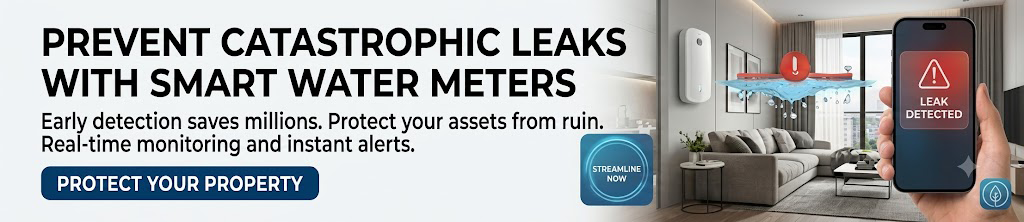
A water leak can become an asset-threatening event long before it appears on a monthly utility bill. In multifamily housing, a failed toilet valve, broken supply line, appliance connection, mechanical-room issue, or unattended vacant unit can create water damage, resident disruption, insurance claims, mold concerns, emergency maintenance costs, and prolonged turnover delays. The challenge is that conventional water billing data often arrives too late to prevent the damage. By the time a high master-meter bill reaches the property, the leak may have been running for weeks. Smart water meters change that operating model by collecting water-use information more frequently and making abnormal patterns easier to investigate. A smart water meter is not a substitute for maintenance staff, inspections, or good plumbing practices. It is a tool that helps teams see behavior that would otherwise remain hidden. For example, continuous low flow during overnight hours may point to a running toilet, while a sudden burst of high flow can signal a broken line or an active failure. With the right data platform, notification rules, and response procedures, a property can move from discovering water loss after the fact to managing risk sooner. The financial value is not limited to water savings. It includes avoided damage, faster repair dispatch, improved documentation, better resident communication, and stronger protection of the property’s operating income. The most effective multifamily leak detection programs connect real-time or near-real-time data to people who know exactly what to do next. Here is how to make smart water monitoring part of a practical asset-protection plan.
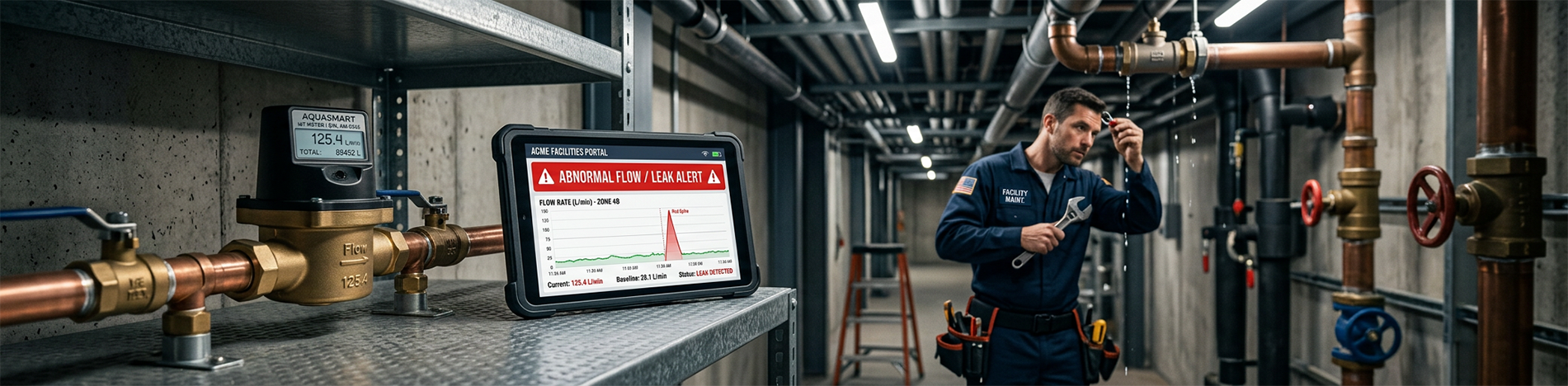
A master utility bill provides a retrospective view of property-wide water consumption. It is useful for accounting, but it does not typically provide the resolution or timing needed to pinpoint a leak when it begins. A sudden increase in a monthly bill can trigger a question, but it cannot tell a property manager exactly which apartment, fixture, or building component created the increase. Smart water monitoring provides more frequent reads that can show water-use trends by unit or monitored location. This makes it easier to identify patterns such as continuous flow, unusual overnight use, consumption during a vacancy, or a sharp departure from historical behavior. A meter does not diagnose the exact mechanical cause on its own, but it gives the maintenance team a meaningful starting point. For a large multifamily property, even a single unresolved fixture issue can become expensive over time. The operational advantage comes from reducing the period between detection and response. Shorter response time can reduce water waste and, in some cases, limit damage exposure.
More alerts are not automatically better. If onsite teams receive too many notifications without context or priority, alert fatigue can set in and critical signals may be missed. A smart water meter program should therefore define practical alert rules based on the property’s normal usage patterns, occupancy, building type, and maintenance capacity. Start with a few actionable exceptions: continuous flow over a defined period, unusual usage in a vacant unit, high-flow events above an expected threshold, or a material increase compared with historical use. Then assign responsibility. Identify who receives the alert, who validates it, how quickly a work order is created, when a resident is contacted, and how the repair is closed out in the system. Green Communities guidance emphasizes prompt leak detection and supports advanced monitoring and leak-detection systems capable of identifying—and in some cases shutting off—water during anomalous use events. It also points to separately monitoring key building areas, such as individual dwelling-unit branches or building risers, as a way to improve visibility.
Technology produces the greatest value when it is paired with a disciplined response playbook. Every property should establish a workflow that differentiates between a potential running toilet, an after-hours active leak, a vacancy anomaly, and a large mechanical event. The response should specify the expected timing, escalation path, maintenance procedure, resident notification language, repair documentation, and follow-up verification.
For example, a continuous-flow signal in an occupied apartment might produce a next-business-day maintenance review, while a sharp high-flow signal after hours may require immediate contact with on-call staff. A meter can support the decision, but the property’s policies determine the outcome. Documenting the alert and response can also create a useful record for management, ownership, insurers, and maintenance performance reviews.
Kaptech can help properties evaluate where smart water meters, remote reading, and submetering data will create the most value. The goal is not to claim that every leak can be prevented. The goal is to give your team earlier evidence, clearer visibility, and a faster path to action when abnormal water use occurs.
Protect your property with a smarter water-monitoring plan. Request a Kaptech Leak Detection Assessment.
Let Kaptech Water Submetering show you and your team how water submetering can deliver increased tenant fairness, NOI and water conservation for your property. Shift the financial responsibility for water to your tenants!